


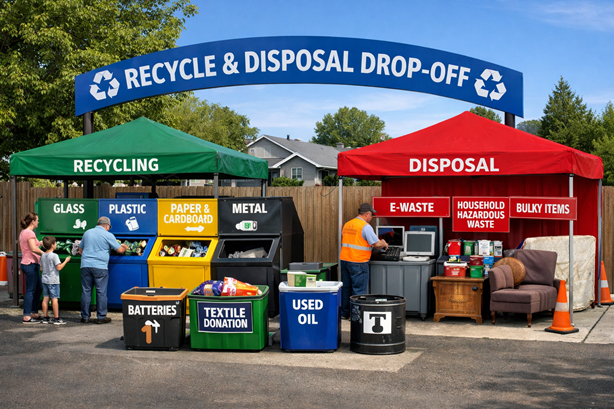
You can locate a nearby recycling drop off quickly by checking municipal websites, national drop-off directories, or brand-specific programs that list local locations and accepted materials. If you need to dispose of batteries, electronics, tires, or specialty items, search your city’s waste-management page or a national drop-off map to find the closest site and exact acceptance rules.
This article Recycling Drop Off Near Me walks you through practical ways to find nearby drop-off points, what items each site typically accepts, and small steps to prepare your materials before you go. Use the tips here to save time, avoid rejected loads, and make sure your recyclables actually get processed.
How to Find a Recycling Drop Off Near Me
You can locate nearby drop-off sites by using address-based online maps, checking your municipality’s waste pages, or installing dedicated recycling apps. Each option shows accepted items, hours, and whether a site requires appointments or special handling for batteries, electronics, or hazardous waste.
Using Online Location Tools
Enter your street address or postal code into national or company maps like TerraCycle drop-off locators or private waste directories to find nearby sites. Look for filters that let you narrow results by material type (e.g., electronics, batteries, soft plastics) so you don’t drive to a site that won’t accept your items.
Check each listing for hours, public access rules, and whether the location is a volunteer drop-off point or a commercial facility. Verify special instructions such as container preparation, appointment requirements, or fees before you go to avoid refusal at the gate.
Local Government and Municipal Resources
Visit your city or county sanitation or solid waste web page and search by postal code or community. These pages typically list regulated-material drop-off sites (household hazardous waste, tires, paint) and staffed transfer station hours that aren’t always shown on private maps.
Download or view municipal recycling calendars and disposal guides to confirm curbside limits and accepted materials. Contact the listed phone number or email if you need clarification on bulky-item drop-off, proof of residency, or seasonal collection events.
Mobile Recycling Apps
Install apps such as recycling locator tools or waste management company apps that use your GPS to show nearby drop-off points. Use app filters to display only sites accepting specific items, and enable notifications for temporary or seasonal collection events in your area.
Take advantage of in-app directions, contact links, and user reviews to assess access and wait times. Keep app data current by reporting closed or changed locations so other users and local managers receive accurate feedback.
What to Know Before Visiting a Local Recycling Drop Off
Check accepted items, how they must be sorted, the site hours and any access rules, and prepare materials so staff can process them quickly. Bring ID or proof of residency if required and confirm any fees before you go.
Accepted Materials and Sorting Requirements
Different sites accept different streams: common drop-offs take paper, cardboard, glass bottles, metal cans, and certain plastics (look for #1 and #2). Many locations also accept electronics, batteries, light bulbs, tires, and household hazardous waste — but these often go to separate collection points.
Sort by material before arrival. Flatten cardboard, rinse food containers, remove caps from bottles if the depot requests it, and place mixed paper in a separate bag. Label or separate e-waste, batteries, and bulbs because these require special handling. If an item has a chemical or a label like “hazardous,” take it to a hazardous-waste event instead.
Hours of Operation and Accessibility
Drop-off hours vary by facility and may change seasonally. Check the site’s online listing or call before you travel to avoid a closed gate. Some depots operate limited days for e-waste or hazardous collections, so verify those specific schedules.
Confirm access rules: many facilities accept only residents of certain municipalities or require proof of residency. Large items may need an appointment or a commercial permit. Also check vehicle restrictions — oversized trailers or commercial trucks might be refused.
Preparation Tips for a Smooth Drop Off
Bring totes, boxes, or bins to keep sorted materials separate in your vehicle. Use clear or labeled bags where required; this speeds unloading and reduces staff handling time. Wear gloves and secure lids on containers that held liquids or chemicals.
Weigh or estimate quantities if the site charges by volume or weight, and have payment method ready if fees apply. Remove personal data from electronics and keep receipts if you need proof of disposal for business or tax records.